Second-Order Attacks, Exploitations and Security Best Practices
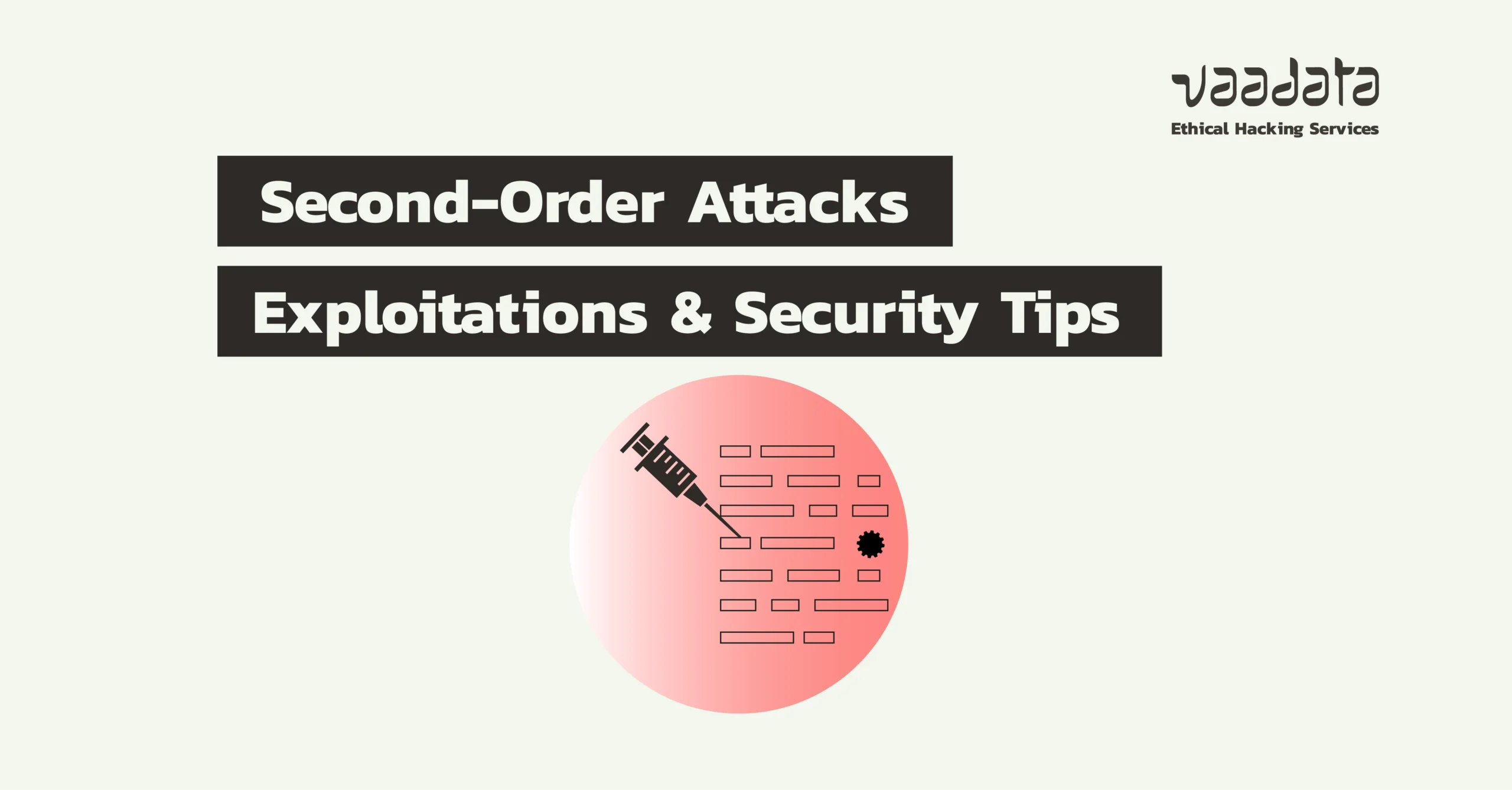
What is a Second-Order Attack? Second-order vulnerabilities are not a distinct type of vulnerability in their own right, as a command injection might ...

A Red Team assessment consists of an offensive and realistic evaluation of an organisation's overall security. Unlike a pentest with a defined scope, this approach looks at the entire ecosystem: network infrastructure, applications, procedures, and the human factor.
The objective is to replicate the techniques, tactics, and procedures (TTPs) used by attackers in order to put all defence mechanisms to the test (technical, organisational, and human).
At the end of the Red Team assessment, a detailed report is provided. It presents the simulated attack scenarios, the intrusion vectors used, the vulnerabilities exploited and the gaps observed in detection and response mechanisms. This in-depth analysis is accompanied by strategic recommendations aimed at strengthening existing defences, optimising incident management processes and developing a more mature security culture capable of dealing with sophisticated threats.

A Red Team assessment goes beyond a simple technical audit. It aims to identify and test all potential attack vectors through a comprehensive approach that integrates human, organisational and technological aspects. However, the scope can be defined in collaboration with your organisation to align attack scenarios with your strategic objectives and key security challenges.
Organisations from all sectors call on our expertise to test their ability to withstand targeted and advanced attacks. Our Red Team missions are integrated into a variety of contexts with a view to improving overall cybersecurity posture.





At Vaadata, we draw inspiration from the TIBER-EU framework to conduct Red Team audits for our clients. We have adapted this methodology to suit our own use cases, particularly in terms of the time allocated to assignments, team composition, etc. To ensure that a Red Teaming assessment runs smoothly, the following teams must be put together:
On the client company side, the client provides information to the Threat Intelligence team to create scenarios. It is also in contact with the Red Team throughout the service.
Also on the client company side, this team is in charge of security. It is completely excluded from the preparation and conduct of the tests.
On the Vaadata side, this team defines attack scenarios against systems, processes and personnel.
Also on the Vaadata side, this team simulates attacks based on the threat scenarios defined by the Threat Intelligence Team.


This stage aims to define the specific objectives of the red team with the organisation. Depending on the risks and security priorities, the red team chooses relevant attack scenarios, establishing the limits of interaction with the security teams to ensure the discretion and effectiveness of the tests.
The Threat Intelligence phase forms the basis of any Red Team mission: it identifies the exposure surface and plausible actors in order to design realistic attack scenarios prioritised according to your business challenges. We collect technical information (domains, exposed services, cloud configurations, application versions) and contextual information (public profiles, suppliers, events, leak history) to identify the most likely initial vectors — spear phishing, exposed API, compromised supplier, cloud bucket, etc.
These elements are used to customise social engineering lures, define concrete business objectives (data exfiltration, compromise of privileged accounts) and build exploitable attack chains (initial access → pivoting → AD escalation).
The red team attempts to exploit the flaws and vulnerabilities found, whether through infrastructure hacking techniques, social engineering or exploiting human weaknesses. The aim is to break into critical systems or compromise sensitive information, while assessing the security teams' detection time.
In this phase, experts seek to maintain access and evade detection measures. This includes concealment techniques to assess the organisation's ability to identify lateral movements or counter attackers' attempts at persistence.
A comprehensive report is produced, including an analysis of exploitable vulnerabilities and recommendations for improving security measures. A presentation to management and security teams is organised to help the organisation integrate these recommendations into its defence strategy.
Each Red Team assessment is unique. We tailor our approach to each client's specific requirements and the objectives of the assignment to ensure that attack scenarios accurately reflect real-world threats.
During this phase, several key elements are put in place: the official launch of the engagement, the formation of the teams in charge of testing, and the validation of the scope of intervention.
The Control Team also defines the ‘flags’ to be captured, representing the objectives and targets to be achieved by the Red Team using various attack techniques.
During this phase, the Threat Intelligence team prepares a report detailing the test threat scenarios and key information about the targeted entity.
Working closely with the Red Team, it simultaneously conducts threat intelligence analysis and reconnaissance activities to refine the attack strategy.
During this phase, the Red Team writes a report detailing the approach taken, the results obtained, and the observations made during the test.
Where relevant, the report also includes recommendations for strengthening technical controls, policies, procedures, and team awareness.
Partnering with Vaadata for a Red Team assessment means choosing a trusted partner to assess and strengthen your organisation's security against the most advanced cyber threats. Thanks to our expertise in offensive security, we are able to simulate sophisticated attacks and uncover hidden vulnerabilities in your systems, processes and personnel.
We have extensive Red Team expertise across a wide range of targets. Our Red Team auditors have in-depth knowledge of the latest attack methodologies and tailor their approach to your organisation’s specific context to maximise the effectiveness of the assessment. This ability to assess multiple layers of security ensures a comprehensive evaluation of your defences.
Vaadata is CREST certified, a globally recognised certification that guarantees the quality and methodology of our security audits. We also hold ISO 27001 certification, ensuring the secure management of our information systems and compliance with best practices in personal data protection.